Introduction: Permanent makeup artistry is a field blending creativity with precision. A common misconception is that ink is primarily introduced into the skin at the needle’s surface during tattooing. However, the truth is more complex and fascinating.
PMU masters pay a lot of attention to sketching, eyebrow symmetry, and new application techniques, but not everyone understands the mechanism of ink application into the skin during the permanent makeup procedure. However, the understanding of this mechanism, in the end, critically affects the understanding of the technique of application, what the residual pigments will be in the skin, and what the aesthetic result will be.
It is common in all basic PMU courses for instructors to tell you that the ink is deposited into the skin at the surface of the needle, but this is not true at all. The ink actually enters the skin when the needle is withdrawn! Yes, that’s exactly right!
Now, I will explain the steps of this process in a few schematic drawings!
So, let’s take a schematic representation of human skin. This is a very simplified schematic representation, but it is enough to explain the essence of the process.
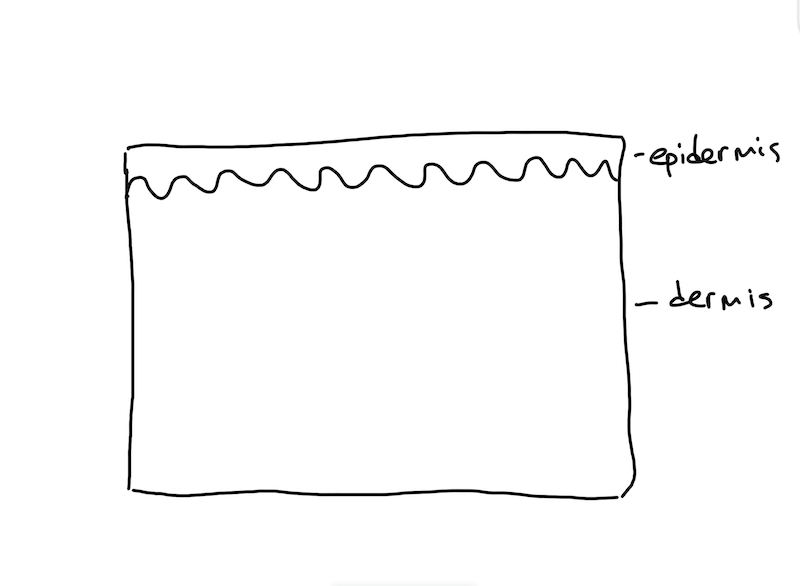
In the upper part, a rather thin layer is the epidermis. The main part of the skin is represented by the dermal layer, and it is in this layer that the master of permanent makeup needs to bring pigment to stay there for a long time.
This, by the way, is also associated with many misconceptions in the industry of permanent makeup. Some masters are sure to bring the ink superficially into the epidermis, and that is what permanent makeup differs from tattooing – I hasten to disappoint you, in terms of skin physiology, the difference between tattooing and permanent makeup is not, except for the amount of pigment introduced. Both in tattooing and permanent makeup, the ink must get into the middle layer of the skin – the dermis.
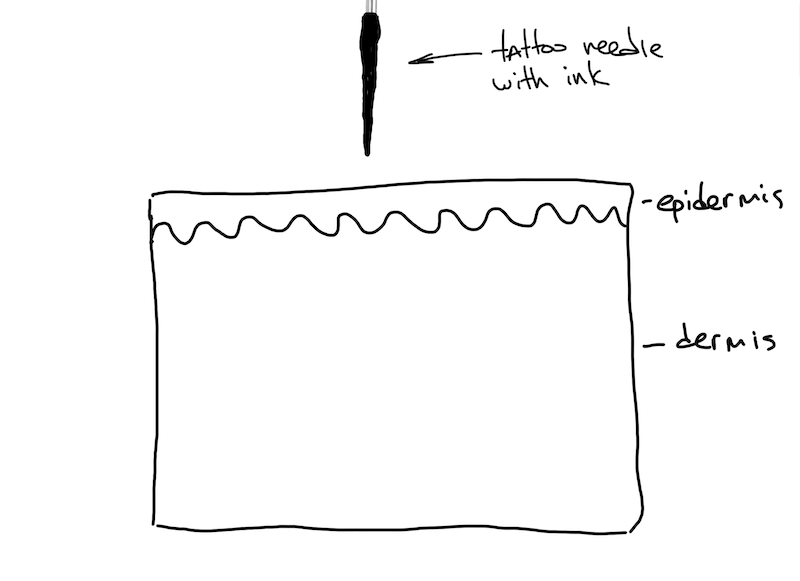
Further, the figure shows a needle with ink on the surface before the moment of entry into the skin. There is nothing particularly interesting. Everything is standard, but then begins the most interesting in terms of biomechanics and understanding of the process!
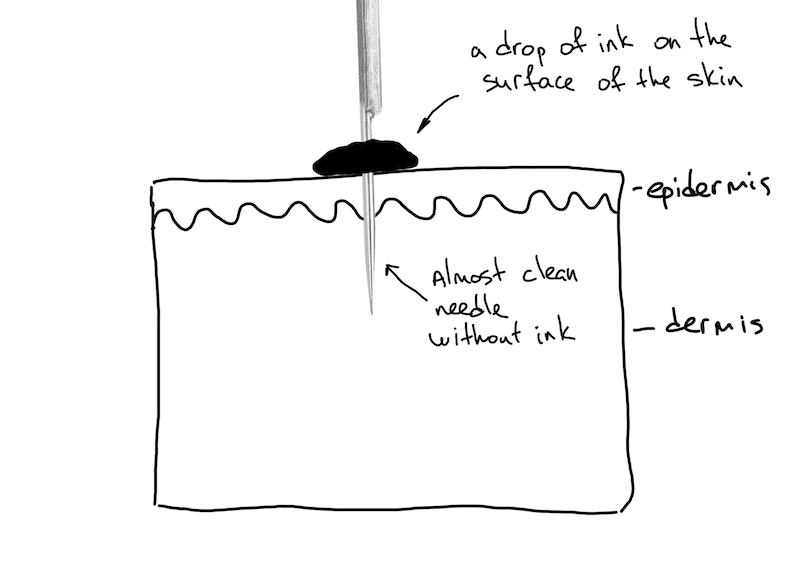
When the needle pierces the skin and enters it, the ink from the surface of the needle is wiped off the edges of the puncture and remains on the surface in the form of a liquid drop, and the needle enters the skin “dry”. Some very small amounts of pigment may penetrate at this point, but not significant at all.
There was a time when special textured needles were promoted, the surface of which was not smooth but specially roughened, and supposedly, due to this, the pigment residue in the skin should be higher. However, they did not win the market because the process of ink application itself is fundamentally different, and such needles did not provide a higher residue. Moreover, these textured needles caused more trauma to the skin.
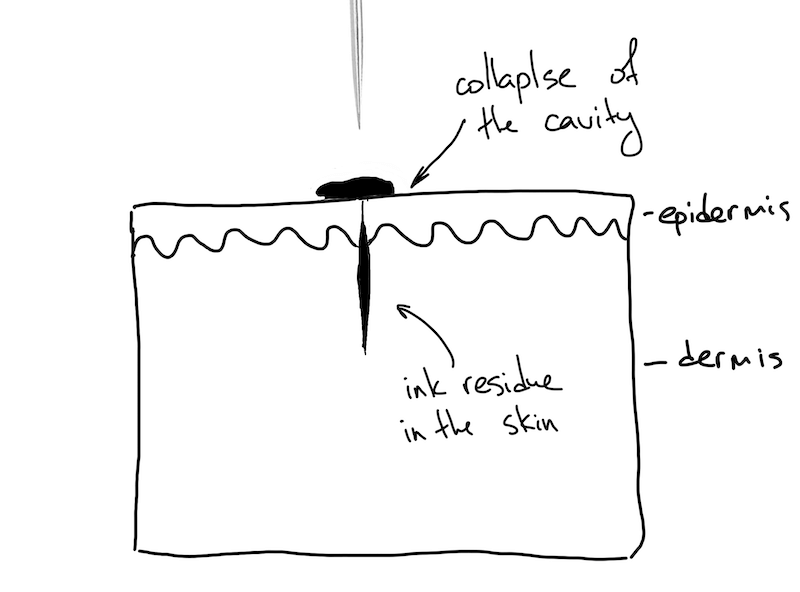
Then, the needle leaves the skin, and for a fraction of a second, there is a cavity in the skin from the needle puncture. This cavity is insulated on top by a liquid drop of ink. There is negative pressure in this cavity from the puncture, and due to it, the ink drop is sucked into this puncture before the cavity itself collapses due to the elastic properties of the skin.
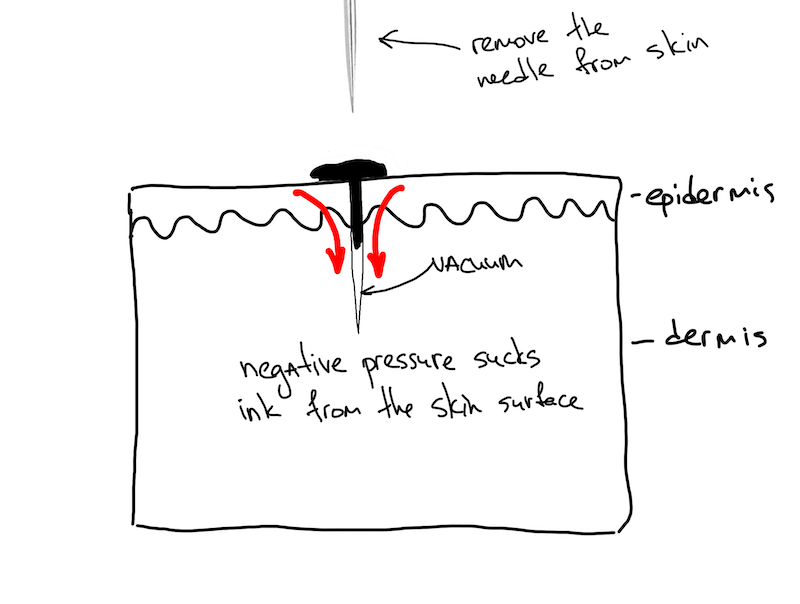
The negative pressure inside the puncture creates a suction force, and a small portion of ink is sucked into the cavity left by the needle. All this happens extremely quickly and can only be seen in slow motion at high magnification. After part of the ink drop has entered the skin, the hole finally collapses under the action of the elastic properties of the dermis and epidermis and leaves the pigment in the dermal layer.

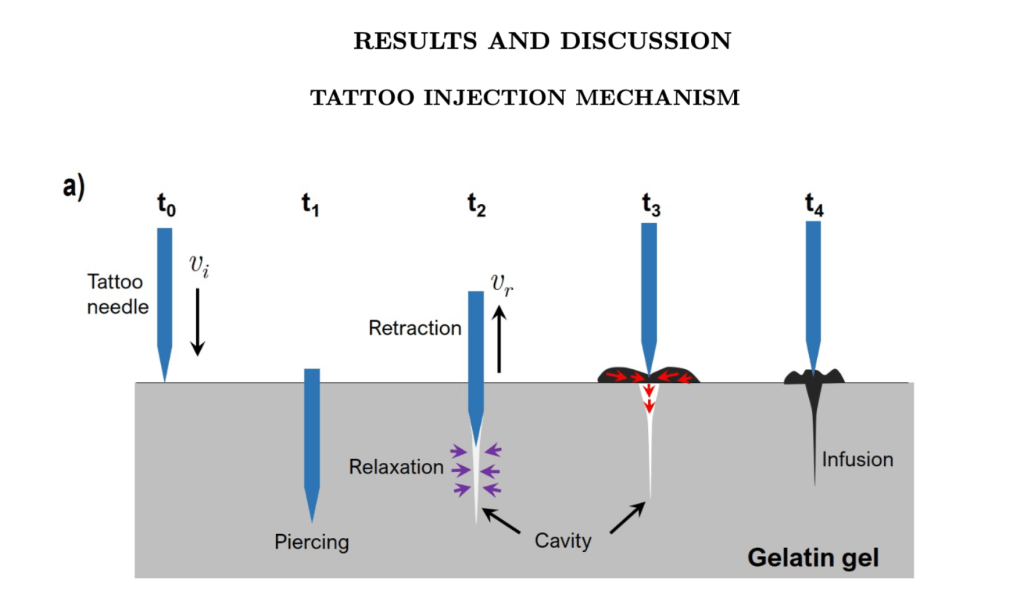
This mechanism of ink entry into the skin has been confirmed by studies; here is an illustration from one such study that shows the identical mechanism I have described here.
Final Thoughts: The art of permanent makeup is as much about understanding the science behind it as it is about the creative process. Understanding this mechanism of pigment introduction gives a logical explanation of how to needle thickness, needle taper, ink fluidity, the pressure of the master’s hand, etc., affect the residue in the skin. And allows a professional permanent makeup artist to consciously influence his technique of ink application!
We will talk about this in the next articles of this blog!
Hope you enjoyed it! Don’t forget to share with your colleagues on social networks!
This will be your gratitude for my hard work and will support me in writing useful articles on this blog!

 Laser Blog