In a previous article, we discussed the biomechanics of the introduction of ink into the skin during the application of permanent makeup. Briefly recall – the ink enters the skin at the moment of needle withdrawal due to suction from the skin surface by negative pressure in the cavity left by the needle.
You can read more here:
The Science Behind Permanent Makeup: Understanding Ink Introduction
In this post, let’s understand how the use of needles with different thicknesses affects the remaining pigment in the skin and the result of permanent makeup.
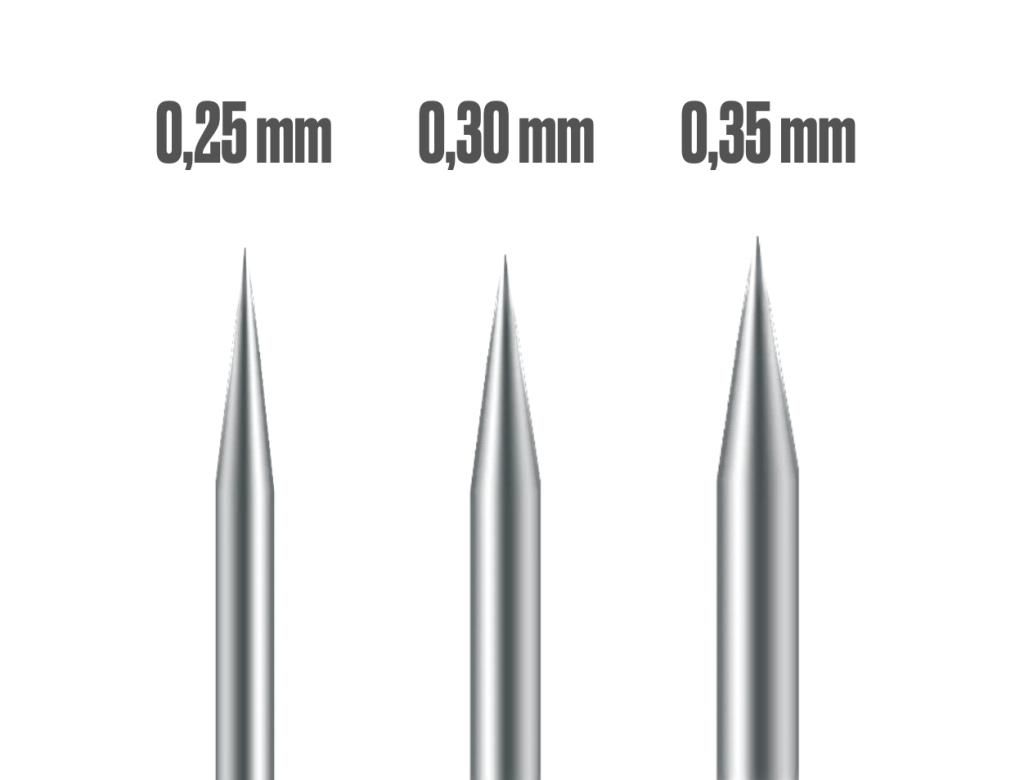
Just in case, I remind you that usually, in permanent makeup, three basic thicknesses of needles are used: 0,25 mm, 0,30 mm, and 0,35 mm.
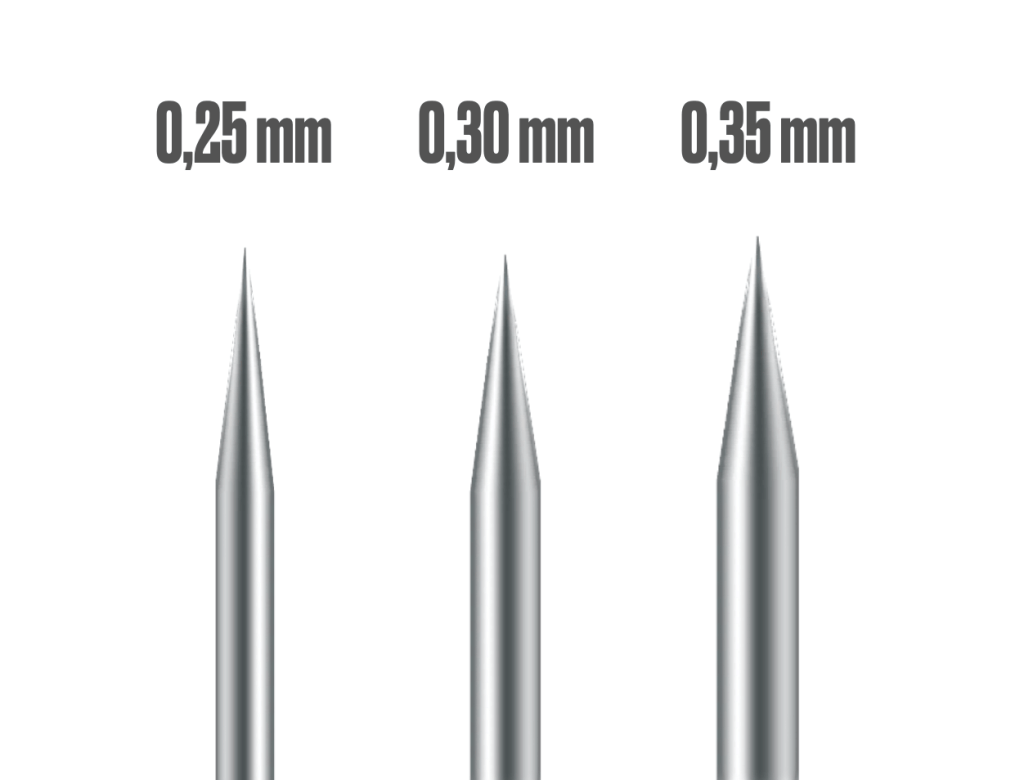
And the result of using these different needle diameters is very different. Everything is explained logically if we proceed from the biomechanics of the introduction of ink into the skin.
Needles with a larger diameter pierce the skin and leave a larger cavity where the ink is absorbed, and the ink is banal more. Therefore, the pixel size will be larger, and the residue in the skin will be larger.
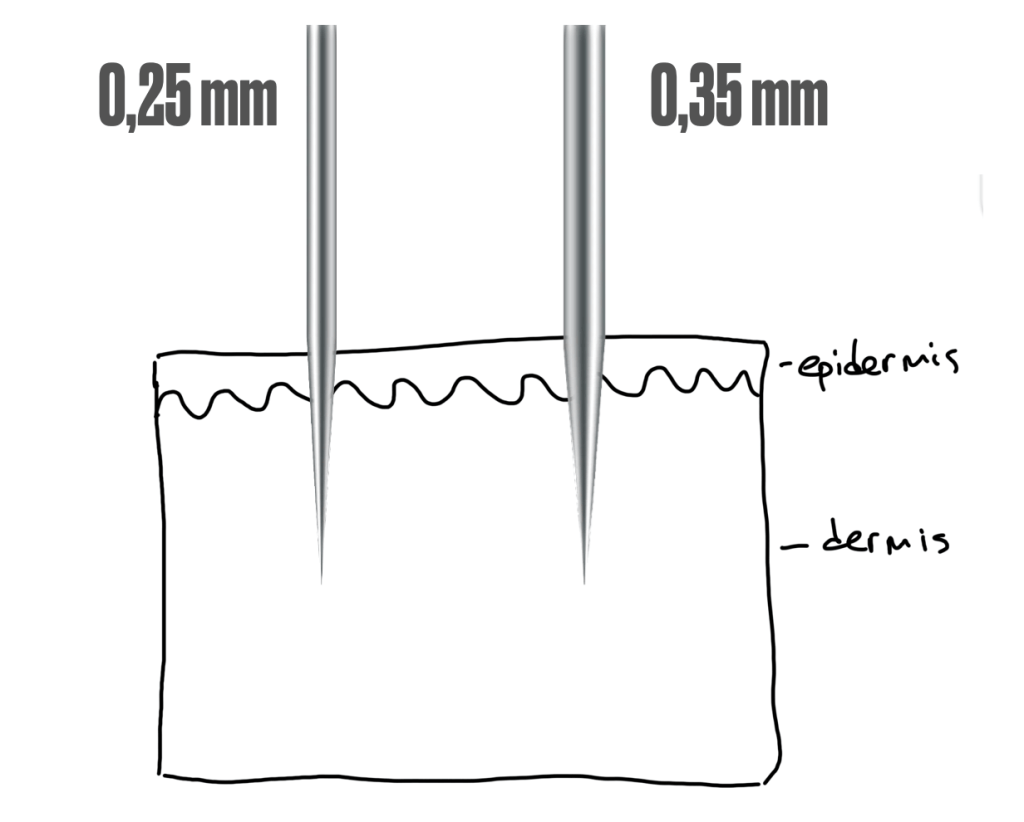
When using larger needle diameters, all other things being equal (taper or needle sharpening), it will take a little more force to get the needle to the same depth as a thinner needle. This should be taken into account when working.
Thicker needles are better to use on thicker and more porous skin, as this will give you more residue than thinner needles.
How taper or needle sharpening is affected will be discussed in my next blog posts!
I hope you enjoyed it! Don’t forget to share on social media!
This will be your gratitude for my hard work and will support me in writing useful articles on this blog!

 Laser Blog