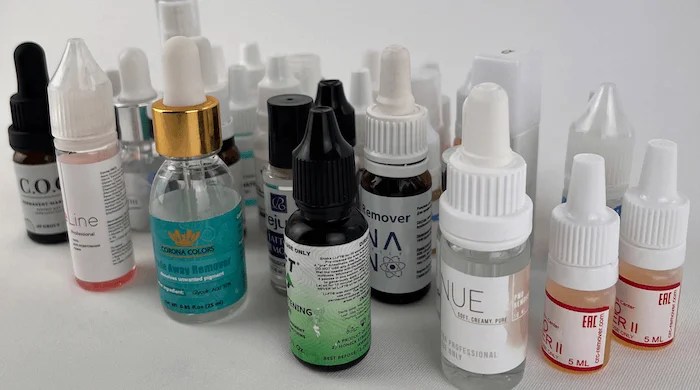
In the world of permanent makeup, the term “chemical removers” sounds impressive, but what does it actually mean?
Chemical removers are not a new innovation in the beauty industry, yet their use in PMU remains shrouded in mystery.
Many PMU artists view them as a magical solution capable of fixing any issues with poorly done PMU or tattoos. However, it’s time to dispel this myth: there’s nothing magical about chemical removers. These are aggressive chemical solutions that may include acids, alkalis, or saline solutions designed to enhance the trauma caused by the artist’s needle.
The process of chemical removal of PMU with these chemical removers involves a combination of mechanical and chemical trauma to the skin. Mechanical trauma is caused by the needle, much like the technique used for applying PMU or tattoos. Tattoo machines or PMU machines are employed to inflict skin trauma, allowing the chemical remover to penetrate the tissue.
Chemical trauma, on the other hand, is directly related to the type of chemical remover used—whether acidic, alkaline, or saline—and its level of aggressiveness. The spectrum of impact varies significantly: from minimal enhancement typical of saline chemical removers to the highly aggressive effects of acidic ones with a pH of 1-2 or alkaline chemical removers with a pH of 13-14.

This combined damage to the skin leads to partial tissue destruction, with pigment particles being expelled along with necrotic tissue. Inflammation plays a crucial role in this process, as it attracts immune system cells to the damaged area, which assist in further clearing pigment particles during the inflammatory response.
The more aggressive the impact on the skin, the stronger the inflammation, and the tattoo or PMU is removed through tissue damage and necrosis. However, artists often fail to realize the dangers of using chemical removers without fully understanding their aggressiveness. They risk walking a fine line between removing pigment and preserving healthy skin, potentially causing severe damage and scarring.
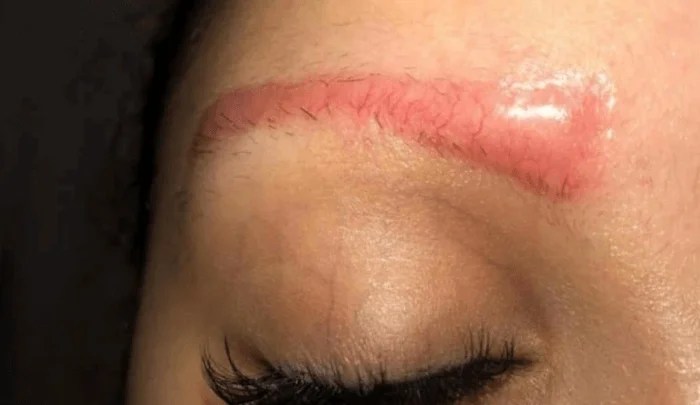
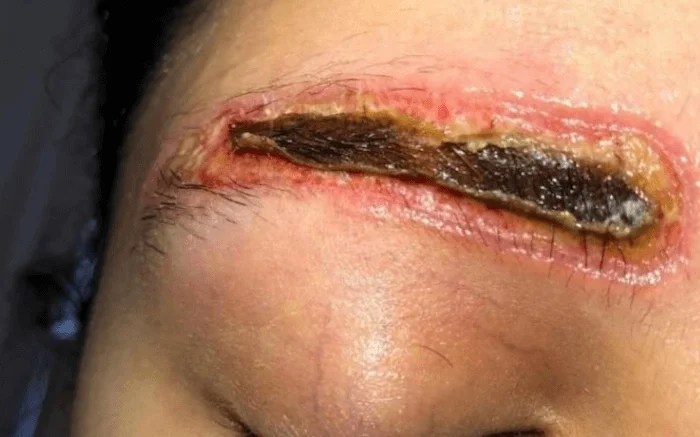
Even within a specific group of chemical removers, such as acidic ones, there is significant variation in aggressiveness, composition, acid concentration, and pH level. Many artists are unaware of the pH level of the chemical remover they’re using, leading to mistakes and severe complications. The situation with alkaline ones is even worse—they are harder to control and can have a pH of up to 13-14, comparable to drain cleaner. Alkaline removers can cause tissue destruction through liquefactive necrosis, making it difficult to manage the depth and intensity of their effects.

In conclusion, chemical removers are not magical solutions; they are tools that amplify skin trauma in the hopes of expelling pigment along with necrotic tissue and clearing the skin through the immune system’s inflammatory response. I urge all PMU artists to treat chemical removers with utmost caution. Learn the mechanisms behind their effects, understand their aggressiveness, compositions, concentrations, and pH levels, and apply them thoughtfully in practice.


 Laser Blog