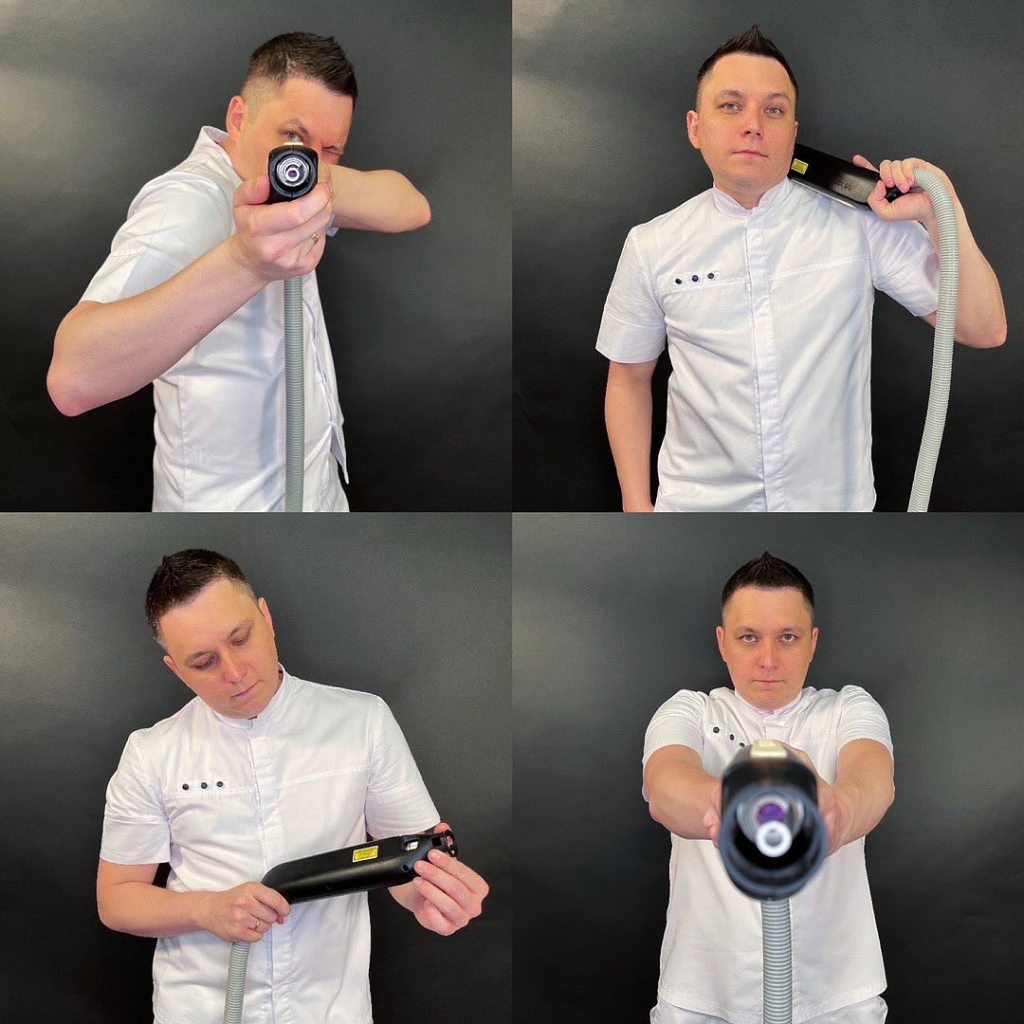
For many laser owners, it can sometimes be surprising to learn that tattoo removal lasers require water. This is because a laser needs a robust cooling system to operate efficiently. During the generation of laser flashes, the xenon lamp, which powers the crystal, emits a significant amount of energy. However, only a small portion of this energy is used for generating the laser pulse itself, while the majority is converted into heat. To prevent the laser from overheating—avoiding crystal breakage due to high temperatures—a reliable cooling system is essential.
Components of a Tattoo Removal Laser Cooling System
A well-designed laser includes everything necessary to maintain a stable temperature for the laser crystal to function. This typically involves:
- A water reservoir,
- Tubing,
- A radiator for heat exchange and maintaining optimal temperature,
- Cooling fans to enhance heat exchange on the radiator,
- A pump to circulate water throughout the cooling system.
In quality lasers, these components are built to a high standard, ensuring stable operation.
Importance of a Cooling System for Tattoo Removal Lasers
The cooling system serves two critical purposes. First, it prevents the laser from breaking down. Second, it ensures stable laser pulse generation with a high-quality laser beam. If the crystal overheats, a phenomenon known as a thermal lens can develop within the crystal, distorting the laser beam and compromising its structure. This affects both the efficiency and safety of the procedure. Hence, a good cooling system is an essential part of the laser, and manufacturers must prioritize its design.
Risks of Using Low-Quality Tattoo Removal Lasers
In very cheap lasers, radiators and cooling fans are sometimes omitted, and the pump may be replaced with a small aquarium pump. Such setups significantly increase the risk of overheating and crystal damage, while also degrading the quality of the laser beam. This is why it’s essential to inquire about the quality of the cooling system before purchasing a tattoo removal laser.
Typically, compact tattoo removal lasers can hold 1.5–5 liters of cooling liquid. The volume of coolant isn’t critical; even 1–1.5 liters can suffice if the radiator and pump are of high quality, and the water circulates efficiently through the optical resonator. Therefore, the cooling system is crucial for the proper operation of a Q-switched Nd:YAG laser used for tattoo removal.


 Laser Blog